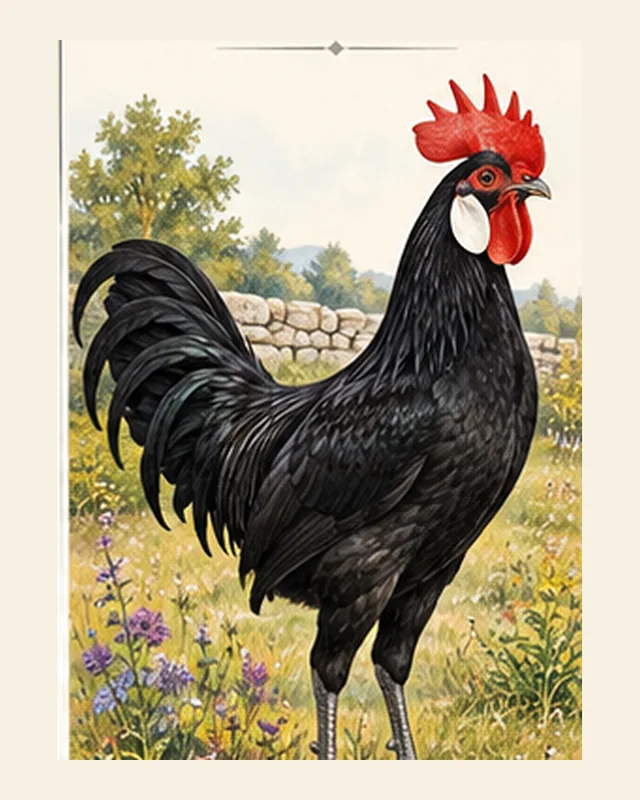
Minorca at a glance
| Egg production | 140–220 eggs/year |
|---|---|
| Egg color | white |
| Size | large; hen weight 7.5 lb |
| Temperament summary | Very active, flighty |
| Housing class | large chicken |
Strongest documented traits
Heat tolerance
Excellent heat tolerance
USU hot-weather recommendation; TLC says thrives in heat
Source confidence: High
Foraging
Excellent forager
great/good forager
Source confidence: High
Predator awareness
Excellent predator awareness
good at evading predators
Source confidence: High
Egg production
Strong egg production
MSU rates excellent; TLC gives 140-220/year
Source confidence: Medium
Things to consider
These are traits that may be a drawback depending on what you want from your flock. Individual birds can vary.
Temperament
Very independent or difficult to handle
flighty/very active
Source confidence: High
Flightiness
Very flighty
flighty and can fly
Source confidence: High
Cold tolerance
Poor cold tolerance
does poorly in cold / frostbite prone
Source confidence: High
Broodiness
Rarely broody
not broody
Source confidence: High
How the planner uses this breed
The flock planner does not rank Minorca from a single overall score stored in the database. Instead, it weights individual traits differently for each household. Cold hardiness matters more in harsh winters; heat tolerance matters more in hot climates; docility receives additional weight when children will handle the birds; and housing size can prevent a breed mix from being recommended even when its preference score is strong.
Sources used for this record
- Utah State University Extension: Managing Chickens From Chicks to Peak Egg Production
- Mississippi State University Extension: Poultry Beginnings: Raise Your Own Backyard Chickens
- The Livestock Conservancy: Minorca Chicken
Last database review: 2026-10-03. Trait values are normalized to a 1–5 planning scale; see the methodology for how uncertainty is handled.