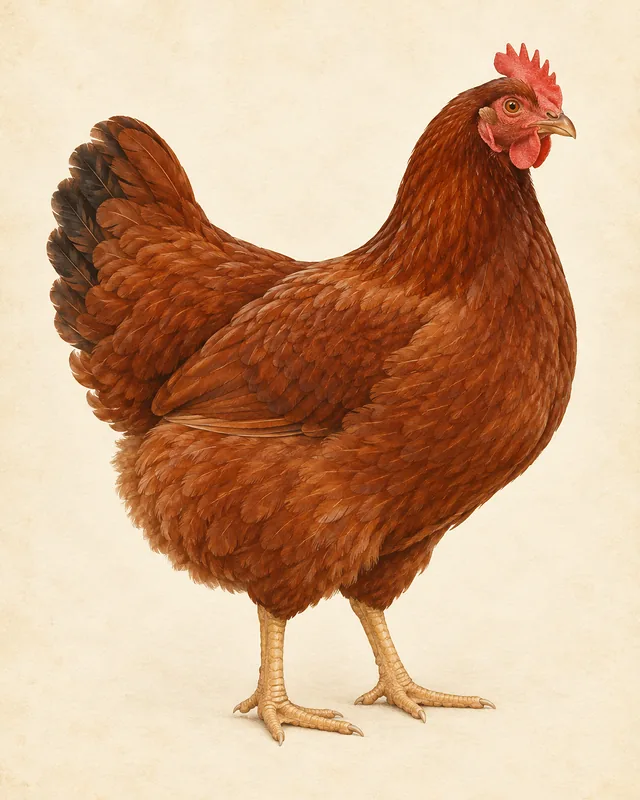
New Hampshire at a glance
| Egg production | 200–220 eggs/year |
|---|---|
| Egg color | light brown, brown, dark brown |
| Size | large; hen weight 6.5 lb |
| Temperament summary | Usually family-friendly; strains vary |
| Housing class | large chicken |
Strongest documented traits
Dual-purpose value
Excellent dual-purpose breed
dual-purpose
Source confidence: High
Broodiness
Often broody
prone to go broody / good mothers
Source confidence: High
Cold tolerance
Very good cold tolerance
known for cold tolerance
Source confidence: High
Heat tolerance
Very good heat tolerance
can do well in warm climates with appropriate housing
Source confidence: High
Beginner friendliness
Good for beginners
usually good for beginners
Source confidence: High
Temperament
Calm temperament
usually family-friendly but stock ranges from docile to aggressive
Source confidence: Medium
How the planner uses this breed
The flock planner does not rank New Hampshire from a single overall score stored in the database. Instead, it weights individual traits differently for each household. Cold hardiness matters more in harsh winters; heat tolerance matters more in hot climates; docility receives additional weight when children will handle the birds; and housing size can prevent a breed mix from being recommended even when its preference score is strong.
Sources used for this record
- Mississippi State University Extension: Choosing the Right Breed for Your Backyard Flock
- The Livestock Conservancy: New Hampshire Chicken
Last database review: 2026-10-03. Trait values are normalized to a 1–5 planning scale; see the methodology for how uncertainty is handled.