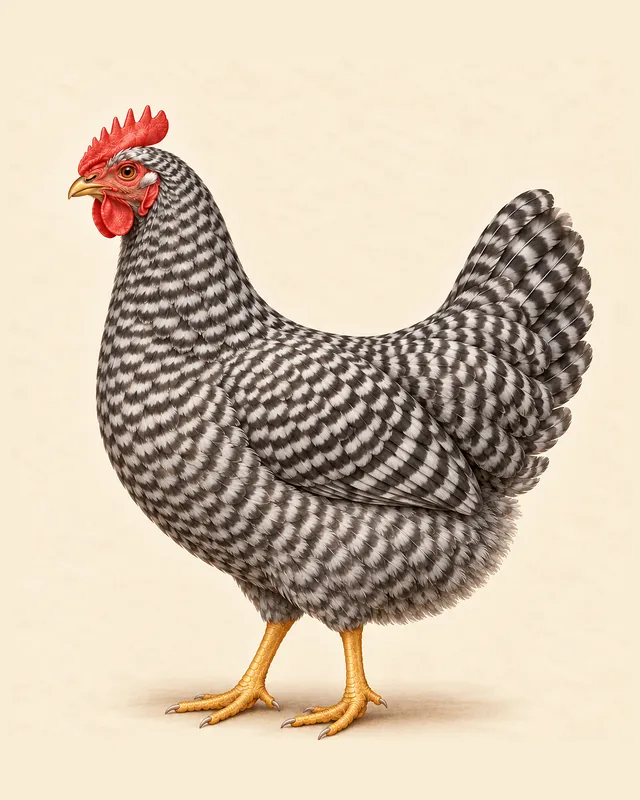
Plymouth Rock at a glance
| Egg production | 200–250 eggs/year |
|---|---|
| Egg color | brown |
| Size | large; hen weight 7.5 lb |
| Temperament summary | Curious, calm/docile |
| Housing class | large chicken |
Would Plymouth Rock suit your flock?
Check your climate, coop space, and egg goals against the breed data. We’ll compare the options instead of automatically favoring this bird.
Check my flock fit →Free, eight-question planner · Breed inclusion is not guaranteed.
Strongest documented traits
Temperament
Very calm and easy to handle
calm/docile
Source confidence: High
Cold tolerance
Excellent cold tolerance
cold-weather recommendation / over-winters well
Source confidence: High
Beginner friendliness
Excellent for first-time keepers
USU beginner recommendation
Source confidence: High
Dual-purpose value
Excellent dual-purpose breed
meat and eggs
Source confidence: High
Broodiness
Often broody
good mothering / historically broody
Source confidence: Medium
Things to consider
These are traits that may be a drawback depending on what you want from your flock. Individual birds can vary.
Foraging
Poor forager
Source confidence: High
How the planner uses this breed
The flock planner does not rank Plymouth Rock from a single overall score stored in the database. Instead, it weights individual traits differently for each household. Cold hardiness matters more in harsh winters; heat tolerance matters more in hot climates; docility receives additional weight when children will handle the birds; and housing size can prevent a breed mix from being recommended even when its preference score is strong.
Sources used for this record
- Utah State University Extension: Managing Chickens From Chicks to Peak Egg Production
- Mississippi State University Extension: Choosing the Right Breed for Your Backyard Flock
- Mississippi State University Extension: Poultry Beginnings: Raise Your Own Backyard Chickens
- University of Minnesota Extension: Caring for chickens in cold weather
- The Livestock Conservancy: Plymouth Rock Chicken
Last database review: 2026-10-03. Trait values are normalized to a 1–5 planning scale; see the methodology for how uncertainty is handled.