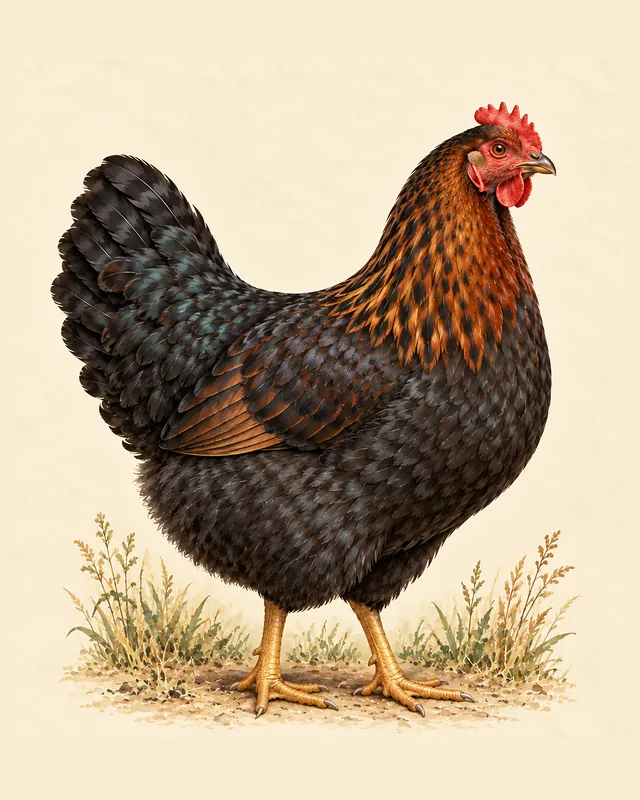
Marans at a glance
| Egg production | 150–200 eggs/year |
|---|---|
| Egg color | dark chocolate brown |
| Size | large |
| Temperament summary | Reserved to flighty |
| Housing class | large chicken |
Would Marans suit your flock?
Check your climate, coop space, and egg goals against the breed data. We’ll compare the options instead of automatically favoring this bird.
Check my flock fit →Free, eight-question planner · Breed inclusion is not guaranteed.
What color eggs do Marans hens lay?
Marans are best known for dark chocolate brown shells in our current breed record. The exact shade can differ among hens and across the laying cycle, so do not expect every egg to look uniformly dark. A dark shell is a breed-selection goal, not an indicator that the egg is more nutritious than a white- or blue-shelled egg. See the colorful egg guide for alternatives.
How many eggs do Marans lay in a year?
Our documented planning range is 150–200 eggs/year, which is lower than several high-output laying breeds in the directory. If your priority is the largest possible egg supply rather than dark shells, compare White Leghorns and the egg-production guide. Age, nutrition, health, daylight, and broodiness can all influence actual laying.
Are Marans friendly and good free-range birds?
Our source-backed record describes the temperament as reserved to flighty with medium confidence. Its foraging trait is rated poor forager, and the record indicates a greater tendency toward broodiness. Those traits may matter if you want a calm bird for frequent handling, strong outdoor foraging, or consistent egg production. Individual birds and strains vary; compare the free-ranging guide rather than assuming dark-egg birds share the same behavior.
Are Marans right for a backyard flock?
Marans are most compelling for keepers who value dark egg color and are comfortable trading away some annual egg output. They are classified as large-sized birds in the planner dataset, which affects housing targets. This record does not yet support separate numerical cold- and heat-tolerance ratings, so evaluate your location and management rather than treating missing evidence as climate suitability.
Compare Marans with more productive or more docile breeds while checking your coop, run, egg goals, and preferred shell colors.
Build my personalized flock →Strongest documented traits
Egg-color uniqueness
Very distinctive egg color
dark chocolate brown eggs
Source confidence: High
Broodiness
Often broody
Source confidence: High
Things to consider
These are traits that may be a drawback depending on what you want from your flock. Individual birds can vary.
Egg production
Moderate egg production
150-200 eggs/year
Source confidence: High
Temperament
More reserved or active
reserved / flighty
Source confidence: Medium
Foraging
Poor forager
Source confidence: High
How the planner uses this breed
The flock planner does not rank Marans from a single overall score stored in the database. Instead, it weights individual traits differently for each household. Cold hardiness matters more in harsh winters; heat tolerance matters more in hot climates; docility receives additional weight when children will handle the birds; and housing size can prevent a breed mix from being recommended even when its preference score is strong.
Sources used for this record
- Utah State University Extension: Managing Chickens From Chicks to Peak Egg Production
- Mississippi State University Extension: Poultry Beginnings: Raise Your Own Backyard Chickens
- University of Maine Cooperative Extension: Maine Poultry Facts: Match Your Need to the Right Breed
Last database review: 2026-10-03. Trait values are normalized to a 1–5 planning scale; see the methodology for how uncertainty is handled.