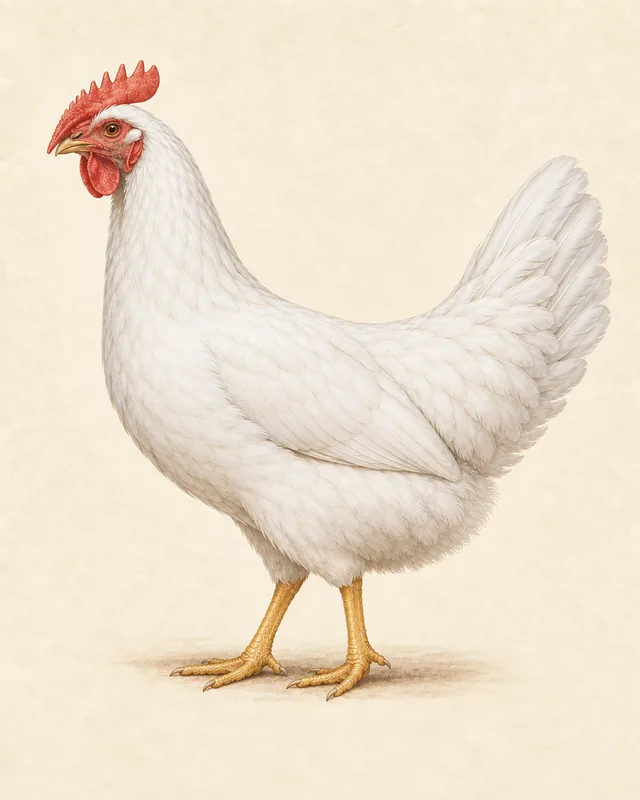
White Leghorn at a glance
| Egg production | 280–320 eggs/year |
|---|---|
| Egg color | white |
| Size | light; hen weight 4.5–5.5 lb |
| Temperament summary | Active, flighty |
| Housing class | laying hen |
Would White Leghorn suit your flock?
Check your climate, coop space, and egg goals against the breed data. We’ll compare the options instead of automatically favoring this bird.
Check my flock fit →Free, eight-question planner · Breed inclusion is not guaranteed.
How many eggs do White Leghorn hens lay?
The current breed source registry supports an estimated 280–320 eggs/year for White Leghorns, with white shells. That makes them a strong option when white-egg production matters most. These are planning estimates, not a promise from every bird: age, daylight, nutrition, health, weather, and individual variation can change actual output.
Are White Leghorns friendly backyard chickens?
White Leghorns are generally active and flighty rather than calm birds that enjoy frequent handling. Their high egg output and efficient laying can appeal to experienced keepers, but someone prioritizing a gentle family flock may prefer comparing a Sussex or Australorp. Every flock includes individual personality differences.
Can White Leghorns free-range?
The planner dataset rates White Leghorn foraging as good forager, while also identifying a strong tendency toward flightiness. That combination can suit managed ranging on a property with adequate boundaries, but roaming behavior, predators, neighbors, and local rules matter. See the free-ranging breed comparison and safety considerations before deciding.
Do White Leghorns tolerate heat and cold?
Our records score their heat tolerance more favorably than their cold tolerance. In colder regions, exposed combs can increase frostbite concerns, so careful winter housing and management are especially important. Review cold-weather breed alternatives and coop and run space targets; no breed removes the need for secure shelter and fresh water.
Compare this high-output, active white-egg layer with calmer or more cold-hardy breeds using your own climate, coop size, and egg goals.
Build a flock around your climate, space, and egg goals →Strongest documented traits
Egg production
Exceptional egg production
280-320 eggs/year
Source confidence: High
Heat tolerance
Excellent heat tolerance
USU hot-weather recommendation
Source confidence: High
Feed efficiency
Excellent feed efficiency
high feed-to-egg ratio
Source confidence: High
Foraging
Good forager
Source confidence: High
Things to consider
These are traits that may be a drawback depending on what you want from your flock. Individual birds can vary.
Flightiness
Very flighty
very flighty
Source confidence: High
Broodiness
Rarely broody
Source confidence: High
Temperament
More reserved or active
active/flighty
Source confidence: High
Cold tolerance
Limited cold tolerance
Mediterranean/light-bodied breed with large-comb frostbite concerns in cold regions; Extension sources favor heavier/smaller-combed birds for winter hardiness
Source confidence: High
How the planner uses this breed
The flock planner does not rank White Leghorn from a single overall score stored in the database. Instead, it weights individual traits differently for each household. Cold hardiness matters more in harsh winters; heat tolerance matters more in hot climates; docility receives additional weight when children will handle the birds; and housing size can prevent a breed mix from being recommended even when its preference score is strong.
Sources used for this record
- Utah State University Extension: Managing Chickens From Chicks to Peak Egg Production
- Mississippi State University Extension: Choosing the Right Breed for Your Backyard Flock
- Mississippi State University Extension: Poultry Beginnings: Raise Your Own Backyard Chickens
Last database review: 2026-10-03. Trait values are normalized to a 1–5 planning scale; see the methodology for how uncertainty is handled.